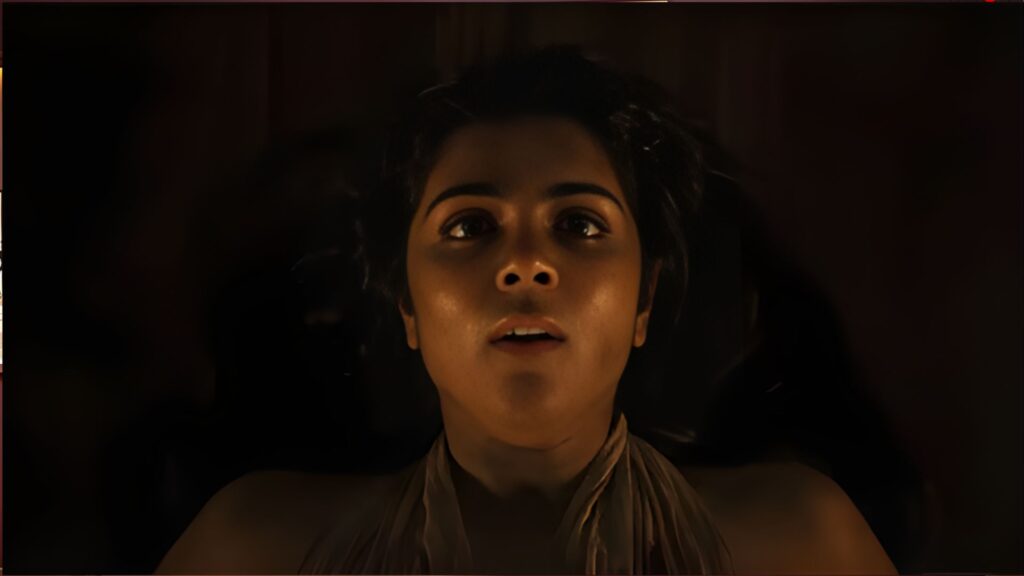
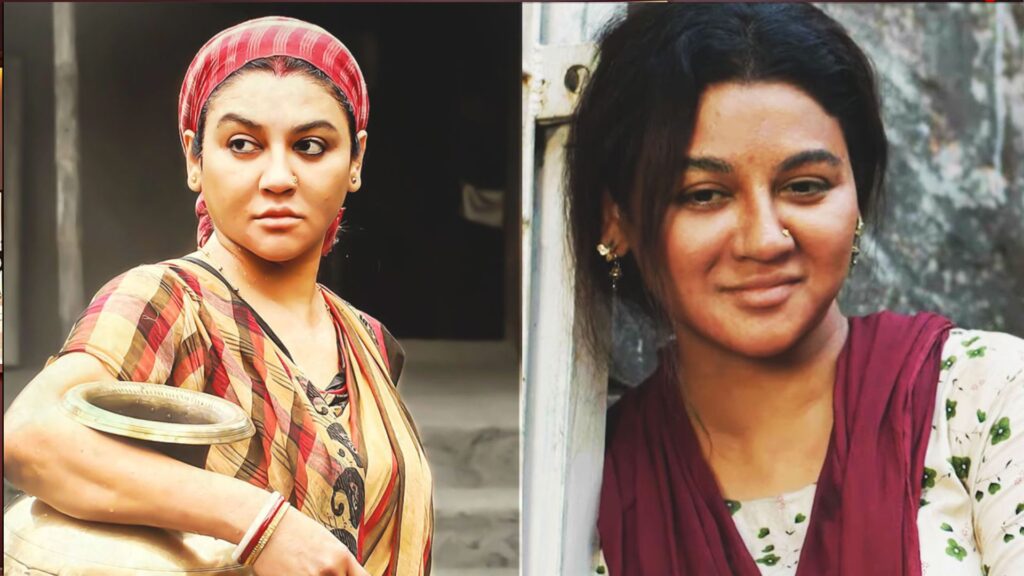
The story Putulnacher Itikatha by Manik Bandopadhyay was serialised in the Bharatbarsher Samayiki magazine between 1934-35. Nearly 90 years after its original publication, the novel has been adapted into a film. The movie, directed by Suman Mukhopadhyay, was released in West Bengal cinemas in August 2023, and now it is coming to an OTT platform for viewers to watch from the comfort of their homes.
Starting from November 14, the film will be available for streaming on the HoiChoi OTT platform. This was confirmed through a post on the platform’s official Facebook page. The film, based on Manik Bandopadhyay’s classic work, stars Joya Ahsan as Kusum, Abir Chatterjee as Shashi, Parambrata Chattopadhyay as Kumud, Dhritiman Chatterjee as Yadav, and Ananya Chatterjee as Sendidi.
Director Suman Mukhopadhyay had been working on the film for years. In a Facebook post ahead of the film’s release, he shared his journey: “The first attempt to make this film was in 2008, but due to various reasons, it got delayed. After 14 years of struggle and near abandonment, I was re-inspired when I read a line from Nabarun Bhattacharya’s Juddha that spoke to me: ‘Hopeless and despondent people see the beautiful story of the mechanical life of puppets, Putulnacher Itikatha.’ That made me realise that this is a story for our time, and I got back to work. Although the shooting was completed in 2022, it took more than three years to finish the film, but the important thing is, it’s finally releasing.”
The director also made some changes to the novel for the film adaptation. “I framed the period before India’s independence, although the original novel was set further back in time. Also, not everything in the novel could be captured on screen, as the mediums are different. I’ve placed more emphasis on the characters’ chemistry,” Mukhopadhyay said.
The trailer of the film introduces Shashi (Abir Chatterjee), who is tired of the mundanity of rural life and dreams of a future beyond the village, where he can practise medicine. However, he keeps his desires bottled up, unable to fulfil his aspirations. As he struggles to escape the monotony, Kusum (Joya Ahsan) enters his life, turning his world upside down. Mukhopadhyay elaborated, “Many people have talked about the novel and written about it. One famous line, ‘Body! Body! Kusum, don’t you have a mind?’ has sparked a lot of discussion. In the novel, it’s not clear whether this line belongs to Shashi or Manik himself. But in the screenplay, it is made clear.”
Speaking about the character of Kusum, Joya Ahsan told Anandabazar Patrika, “Women have often been portrayed as mere objects of desire in literature and films. But Kusum is different. She has desires and passions of her own, and she doesn’t hide them. Kusum is an open book. Her mind, body, and soul are in harmony, unlike Shashi, who struggles with his internal conflicts. Kusum has the power to challenge Shashi’s character. She’s free-spirited, open-minded, and a refreshing character.”
Ahsan also mentioned that even though she filmed the role a while ago, the character of Kusum still lingers within her. Chatterjee, who plays Shashi, added, “Kusum has no hesitation or inhibition. We all have some boundary, some limit, but Kusum doesn’t have that. That’s why she seems so modern. I don’t think I can ever be like her. If we look at the Bauls of rural Bengal, their mind, body, and soul are one. That’s what Kusum is like.”
Shashi, on the other hand, is a rational, science-driven man who also grapples with internal conflict, doubt, and indecision. Abir Chatterjee reflected on the character, “There’s a certain indecisiveness among Bengali people, and Shashi shares that trait. But I feel fortunate to have had the opportunity to play such a character.”
Another actor in the film, Parambrata Chattopadhyay, mentioned that he was drawn to the role because of a particular scene. The film features a palagaan sequence, and Chattopadhyay was unable to resist the allure of being a part of that traditional theatre-style performance.
While Putulnacher Itikatha has garnered much discussion and praise for its adaptation, it also presents a new take on the classic tale. Director Suman Mukhopadhyay’s careful balance of nostalgia and modern cinematic sensibilities is reflected in the film. The movie is set against the backdrop of pre-independence India, where the characters’ internal struggles mirror the larger socio-political turmoil of the time. With a mix of folklore, personal desire, and deep philosophical themes, Putulnacher Itikatha offers much more than just a period drama—it is a window into human emotions and desires, making it a must-watch for film enthusiasts.
Available on HoiChoi from November 14, the film brings the timeless classic to modern-day audiences, and it’s clear that this adaptation is poised to leave a lasting impact on Indian cinema.