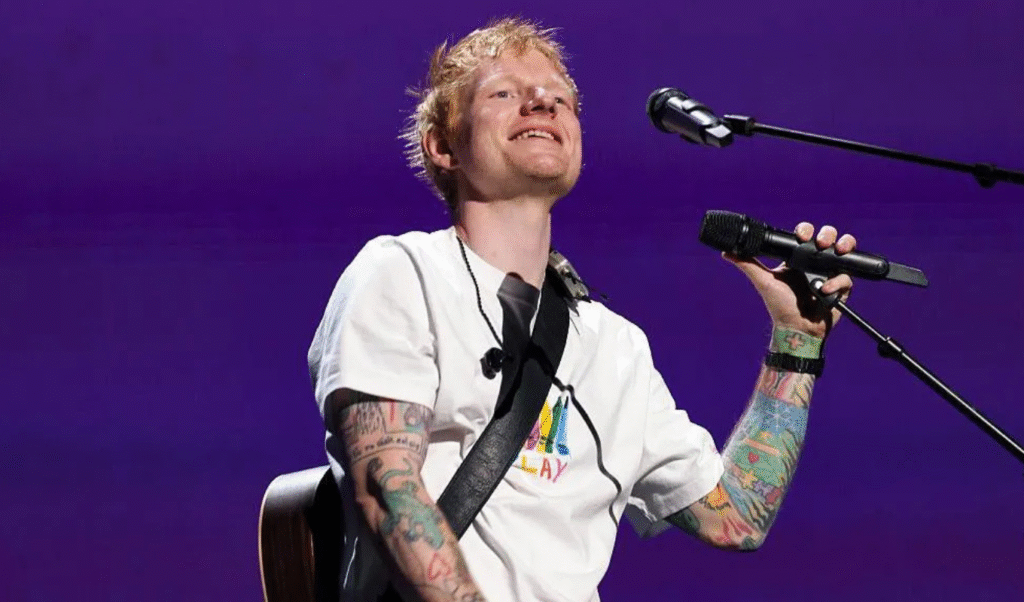
Ed Sheeran has warmly welcomed changes to the national curriculum in England, which will allow more students to study creative subjects, including music.
The singer-songwriter praised the government’s initiative to modernise school curriculums, particularly the decision to remove “outdated systems” that previously hindered children from studying music and the arts. Following the first major review of the curriculum in over a decade, the reforms will also ensure that students are taught essential skills such as identifying fake news and understanding how mortgages work.
Education Secretary Bridget Phillipson explained that the government’s aim is to “revitalise” the curriculum, while ensuring a strong foundation in core subjects like English, maths, and reading.
Headteachers have expressed support for the review’s recommendations, calling them “sensible”, though they stressed that these changes would require adequate funding and staffing to be successful.
These changes come after the government commissioned a review of England’s national curriculum and assessments in 2023. The aim was to create a “cutting-edge” curriculum that would help close the attainment gap between the most disadvantaged students and their peers.
One key change is the decision to scrap the English Baccalaureate (EBacc). Introduced in 2010, the EBacc was used to measure school performance based on how many students studied English, maths, sciences, history or geography, and a language. However, the Department for Education (DfE) has argued that the EBacc system was too restrictive and discouraged the study of subjects like the arts. By removing the EBacc and reforming other ranking systems like Progress 8, the government hopes to encourage students to study a broader range of subjects, including creative ones like music.
Ed Sheeran had previously written an open letter to the government, alongside other artists including Harry Styles, Annie Lennox, and Sir Elton John, urging for greater investment in music education and the scrapping of the EBacc.
In an emotional statement, Sheeran praised the reforms, saying: “This change gives young people hope and the opportunity to study music. Without the encouragement I received in school, especially from my music teacher, I wouldn’t be a musician today. Music education helped me find confidence in myself, and it still plays an important role in my mental health.”
He added that there is still much more to be done to support music education, particularly in terms of providing better resources and support for music teachers.
Prime Minister Sir Keir Starmer expressed his gratitude to Sheeran for his efforts to advocate for music education, promising that his government would continue to revitalise the arts in schools. He wrote in a letter: “Learning music at school made a huge difference to my life. We will make sure every child has access to those experiences… so that creativity isn’t a privilege, but a right.”
Arts Council England also applauded the curriculum changes, calling them “a great day for the next generation of creative talent in England.”
The curriculum reforms include several other key changes, such as:
- Financial literacy will be taught in compulsory citizenship classes and integrated into other subjects.
- A new focus on spotting misinformation and disinformation, alongside a proposed qualification in data science and AI for post-16 students.
- Reduction of GCSE exam time, cutting up to three hours per student on average.
- Ensuring that all children take three science GCSEs.
- More content on climate change.
- Better representation of diversity in the curriculum.
- The review also recommended giving oracy (speaking and listening) the same status in the curriculum as reading and writing, which was hailed by the charity Voice 21 as a “vital step forward” for teaching children valuable communication skills.
However, Phillipson told BBC Radio 4’s Today programme that the government would not simply replace one set of lessons with another, but rather implement a “better sequencing” of the curriculum. This, she said, would help ensure that children do not repeat content unnecessarily.
Although many of the review’s recommendations will be adopted, the government has decided not to implement all of them. Notably, it is moving forward with reading tests for Year 8 pupils, even though the review had suggested compulsory English and maths tests for that age group. Phillipson justified this decision by pointing out that pupils who struggle with reading often face difficulties in other subjects.
She also addressed concerns that scrapping the EBacc could result in fewer students studying subjects like history, geography, and languages. “The EBacc hasn’t led to improved outcomes,” she explained, “and hasn’t improved language study.” She reassured the public that students would still have access to a broad range of subjects, including arts and music.
Shadow Education Secretary Laura Trott criticised the changes, claiming that while some aspects of the review were beneficial, others could be “fundamentally wrong” and “really bad for standards.” She argued that the government’s failure to clarify which subjects would be removed from the curriculum risked “reducing standards and accountability” and could disproportionately affect disadvantaged students.
Professor Becky Francis, who chaired the review, explained that one of the biggest challenges identified in the report was the difficulty students face when transitioning from primary to secondary school. This was particularly evident among disadvantaged students, she said. However, she emphasised that the review’s approach was intended to be evolutionary, not revolutionary, and noted that England’s pupils already perform well by international standards.
The former Conservative schools minister Nick Gibb expressed concern that removing the EBacc would lead to a “precipitous decline” in the study of foreign languages, with the risk that language learning would become increasingly restricted to private schools and wealthier families.
The Liberal Democrats welcomed the broader curriculum but argued that scrapping the EBacc altogether was not the best solution. Education spokeswoman Munira Wilson warned that the reforms would place even more pressure on headteachers, who are already struggling with budget cuts. “Without a costed plan and proper workforce strategy, these reforms will stretch teachers even further and fail our children,” she said.
Pepe Di’Iasio, General Secretary of the Association of School and College Leaders, described the review as a “sensible, evidence-based set of reforms.” However, he added that delivering a great curriculum would require sufficient funding and staffing. “It’s ironic that the government keeps asking for more and more from a pot that is actually getting smaller,” he said, urging the government to ensure that schools have the resources they need to implement the changes effectively.
Overall, the curriculum reforms mark an important step towards a more inclusive and balanced education system, but their success will depend on the government’s ability to properly fund and support the implementation of these ambitious changes.